Home · Original Games · Poker Race
Poker Race - rules of the four-Ace race
Poker Race is the most distinctive game in our original set. Four Aces start at the leftmost column, the dealer draws cards from a shuffled deck, and the suit of each draw decides which Ace moves forward. The blocking cards in the five centre columns can push an Ace back. The first Ace past the fifth column wins.
How the table is dealt
-
Take a 52-card deck
Standard deck, both jokers removed.
-
Place the four Aces in the leftmost column
Ace of Spades, Ace of Hearts, Ace of Diamonds, Ace of Clubs. They all start in the same starting column.
-
Shuffle the remaining 48 cards
This is the draw deck plus the five blocking cards.
-
Place five cards face-down to the right
Five blocking cards are placed face-down, one per column, in the five columns to the right of the Aces' starting column. The first card dealt goes into the rightmost column, the second into the next column to the left, and so on. These cards stay hidden until they are triggered.
-
The remaining cards become the draw deck
From this point on, draws come from this deck.
What happens with each draw
-
Draw a card from the deck
Reveal its suit.
-
The matching Ace moves one column right
For example, if the drawn card is the 7 of Hearts, the Ace of Hearts moves one column to the right. The other three Aces do not move.
-
If all four Aces have left a column, that column's blocking card triggers
When every Ace has moved past a column - meaning no Ace is in that column or any column to its left - the face-down blocking card in that column is revealed. The Ace whose suit matches that blocking card moves one column back to the left.
-
Repeat until one Ace crosses the finish
Keep drawing. The first Ace to move beyond the fifth column wins the round.
Bet on which Ace wins
| Bet zone | How to win | Payout |
|---|---|---|
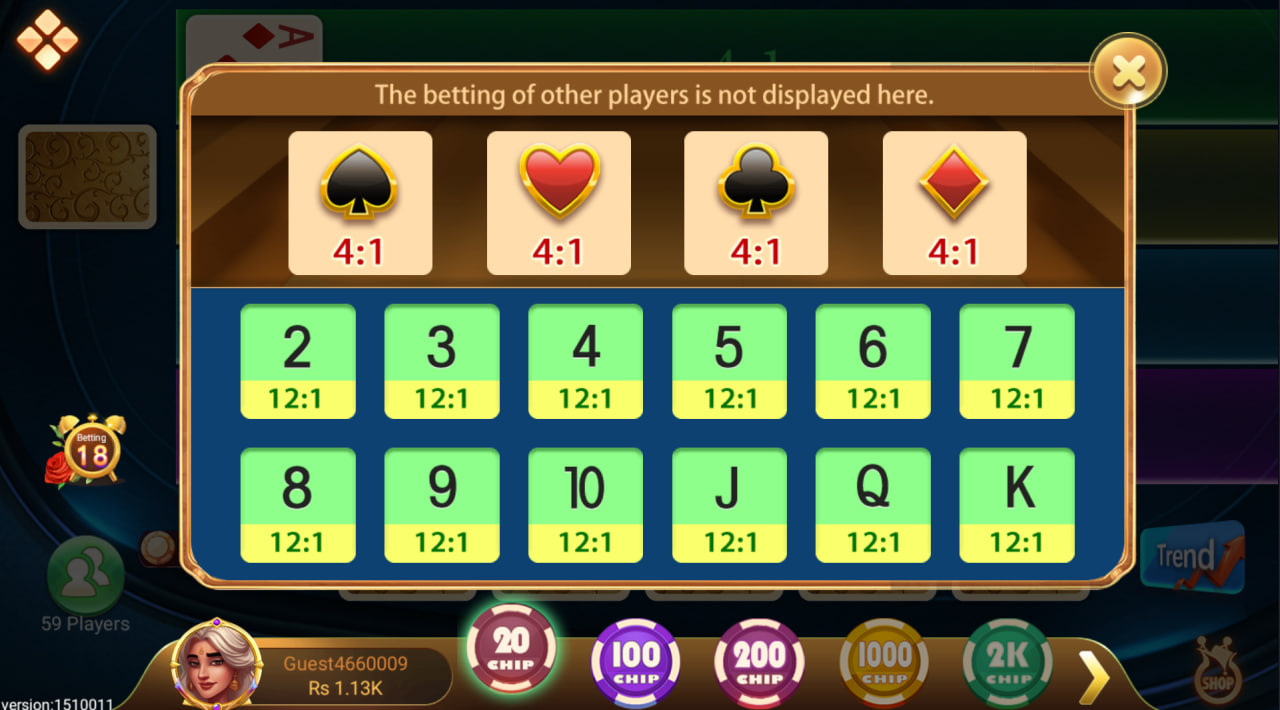
| Ace of Spades | Wins if the Ace of Spades is the first to cross the finish. | 1:4 |
| Ace of Hearts | Wins if the Ace of Hearts is the first to cross the finish. | 1:4 |
| Ace of Diamonds | Wins if the Ace of Diamonds is the first to cross the finish. | 1:4 |
| Ace of Clubs | Wins if the Ace of Clubs is the first to cross the finish. | 1:4 |
Inside the bet panel the button shows a preview of the first card and its suit. The first card is what kicks off the race - it is also useful information for picking which Ace to back.
What the table looks like
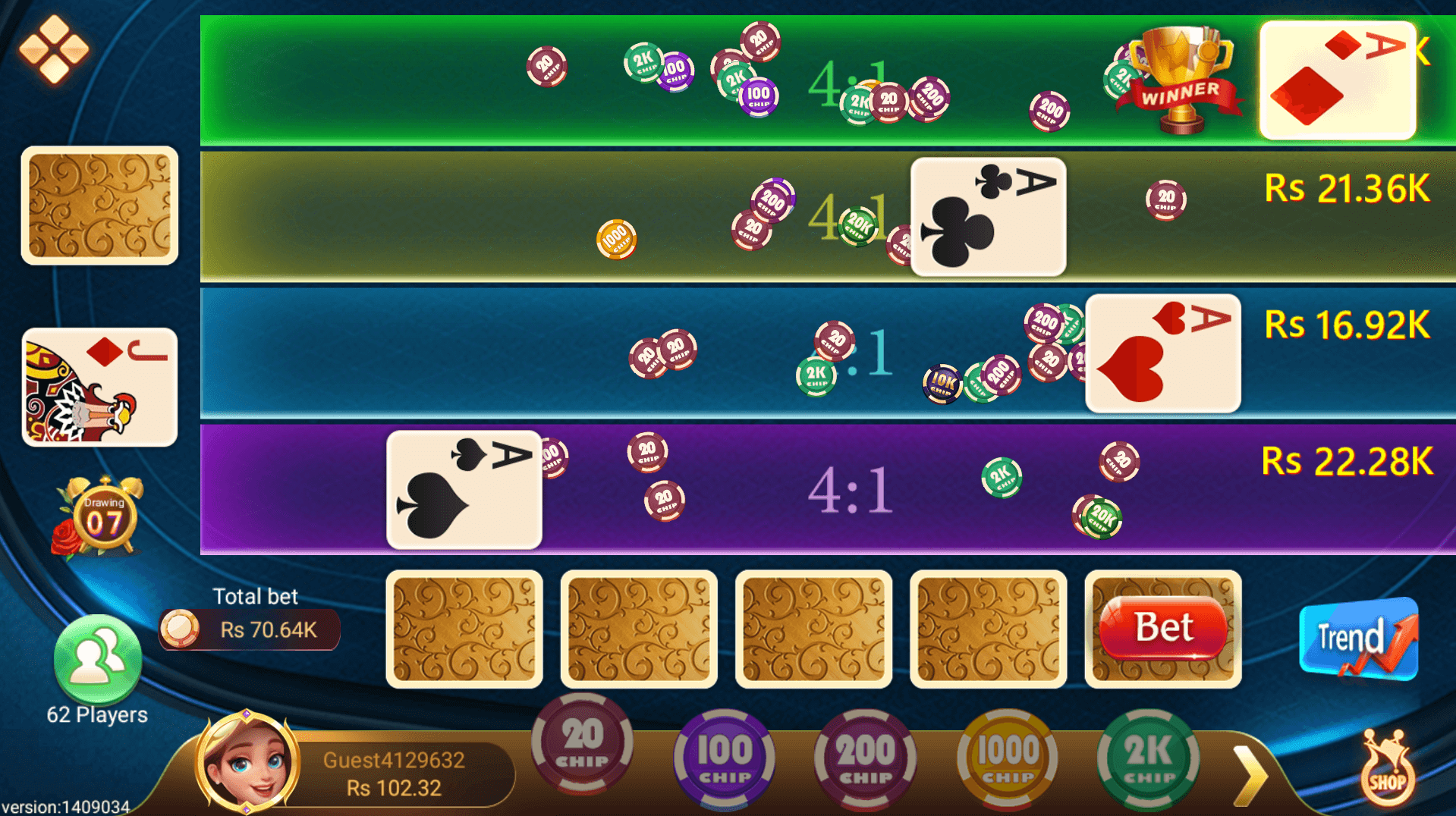
Why the blocking cards matter
If you only read the first half of the rules, the game looks like a coin flip - the suit of each draw decides movement and the deck has equal numbers of each suit. The blocking cards add a second layer. Once a column "opens up", the blocking card can punish whichever Ace has been racing ahead, depending on its suit. That single mechanic is what makes the game watchable rather than fully flat.
It is fine to back the Ace whose suit matches the first card preview. It is also fine to back a different Ace if you read the blocking pattern differently. There is no winning strategy that survives a long session - the design is randomised on purpose. Picking is part of the entertainment, not part of a system.
What strategy looks like in a slow card race
Poker Race rounds run 1-3 minutes - the slowest of the original mini games on this site. The slower pace gives a player more time to think, but it does not change the underlying maths: 1:4 payouts on a four-way race give the house a long-run edge. Strategy here is mostly the avoidance of compounding mistakes during the longer round.
1 · Pick before the first card
The bet panel preview shows the suit of the first card before it is revealed. Some players use that as the basis for their pick (it suggests which Ace will get the head start). That is acceptable as a heuristic; the trap is changing your bet halfway through the round once the race shifts. Once you place the bet, the rest of the round is for watching, not negotiating.
2 · Watch the blocking cards before the next round
The blocking cards are the layer that makes Poker Race different from a coin flip. After each round, take a quick mental note of which suits got blocked and which got through. This will not give you an edge against the deck (the next round reshuffles), but it builds the habit of treating each round as its own event - which inoculates against the gambler's fallacy.
3 · Cap the rounds before the rupees run out
Each round is 1-3 minutes. Twenty rounds is roughly an hour. If your money cap is PKR 500 and your typical bet is PKR 50, you reach the cap at around 12 lost rounds - well before the round-count cap. Both caps need to be set; whichever is hit first ends the session. The responsible gaming page has the longer treatment.